The problem
FAA rules require drones to broadcast Remote ID, including their position and velocity, and nearby aircraft can use those broadcasts to avoid each other. But the contents of a broadcast are only as honest as the sender. A spoofed position could disguise malicious activity or trick neighbors into unsafe maneuvers.
Our approach
The contents of a message can be forged; the physics of the radio signal that carries it is much harder to fake.
- Detection from signal dynamics. Vanderbilt built OMNeT++/INET simulation infrastructure and compared detectors that run onboard a single aircraft, federate measurements across receivers to localize the true transmitter, or learn from labeled data. Each trades accuracy against coordination and training cost.
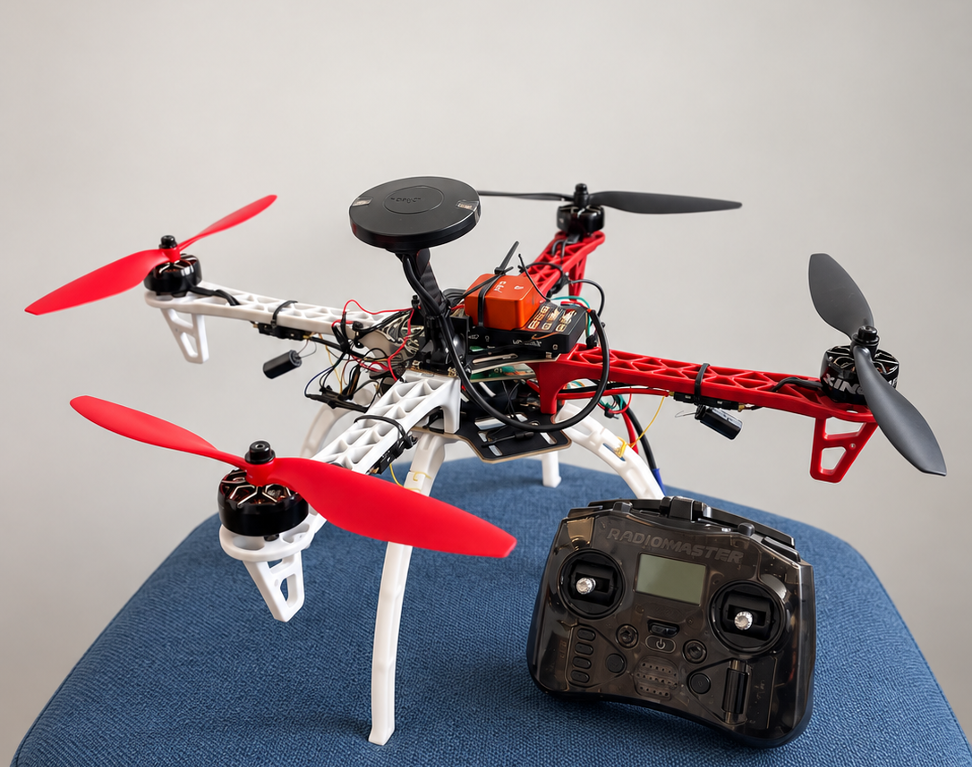
- Real radios. A hardware testbed with a software-defined radio extends detection with Doppler shift and angle of arrival, so a spoofer that adjusts its power still produces a signature that contradicts its claimed track.
- Spoofing-aware planning. With UT Austin, Vanderbilt treats Remote ID as unverified: a suspected spoofer is localized under uncertainty, converted into a chance-constrained unsafe region, and avoided by decentralized trajectory planners.
Looking ahead
Next steps fuse Doppler and angle-of-arrival measurements into localization and validate detection against real-world RF environments.